In the weeks edition of History and Context of Journalism, we learnt about the wacky work of Wilhelm Reich. Reich was a former follower of Sigmund Freud (until falling out with him), but like him, he was also keen on the sub-conscious mind and how sex impacted on our behaviour.
As Brian so eloquently put it at the start of the lecture: "He believed you couldn't be truly happy un;ess you were having proper orgasms." Reich held the belief that humans were fundamentally good people and it was society that repressed and controlled them. Sex was seen as the answer to being free and liberated. If you weren't sexually repressed then you would flourish as a human being. In other words, getting your leg over is fan-bloody-tastic!
Now, to anyone that isn't a member of the clergy, this may seem pretty damned obvious. But in the frigid time known as the first half of the 20th century it was a bit of a mind-blower. With Freud being highly influential, most people were keen on his ideas of repression. Reich, being a sexually liberal fellow, was having none of it. His fondness for orgasms comes from his belief in this thing he called "Orgiastic potency". If you surrendered yourself to sex and to orgasms, then you would no longer be repressed.
Reich was also no fan of the Nazi's, as most people weren't during the 30's and 40's. Despite this, he also made the claim that everyone has the ability to be fascists. This stems from his ideas about the layers of the mind. These were similar to Freud's Id, Ego and Super Ego. In the first layer there is the polite and compassionate part of the mind. This would be similar to the Ego. The Id in Reich's scheme is the second layer. This contains the cruel and sadistic layers of the mind. According to Freud, this was what the sub-conscious was truly like. However, Reich argued that there was a layer below that. This third layer was what needed to be released, ideally through sex.
 Reich argued that Nazism was embodied by the second layer. In asking why people supported the Nazi's, he theorised that they focused on the lower middle classes. His argument is that the lower middle class is repressed from a young age by their father figures. Because of this, they like the authoritarian nature of fascism, but also like the idea of rebellion. Unfortunately, due to their repression they are completely incapable of rebelious acts.
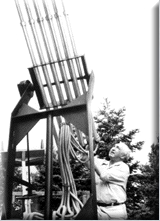
While this all sounds fine, and in theory it is, Reich was a bit of a nutcase. One of his key beliefs was in something called "Orgone Energy". This was a field that we breathed in and if we didn't find release (through orgasms) then we'd become frustrated and repressed. He believed that we could harness this power and use it to alter peoples emotions and do all sorts of fancy nonsense such as curing cancer. This could be done through 'Cloudbusting'. Orgone energy would be collected in these things that looked like anti-aircraft guns. That would be pointed at the sky and the energy would be released and cause it to rain. Bonkers...
After Freud's theories fell out of favour with society, Reich saw a rise in popularity. Fed up with Freud's love of repression, Reich's message of people being inherrantly good struck a chord with people, especially the counter-culture of the 60's. Fed up with the repression they were used to, the began to protest against the government and perceived injustices. After being heavily enforced by the police, they came up with the phrase: "There's a policeman inside my head. He must be destroyed," stemming from the belief that if they themselves were liberated mentally, they would be solve their problems.
Unfortunately for poor old Wilhelm, he never got to see his theories rise in popularity. He died in jail after trying to flog an Orgone Box in 1957. Darn.